Dance Brothers Revolver (CSA)

- Category
- Revolver
- Barrel
- 191 mm
- Weight, empty
- 1.13 kg
- Introduced
- 1862
About
What it is, and why it matters
The Dance Brothers revolver, made by J.H. Dance & Brothers of East Columbia, Texas, is a Confederate percussion (cap-and-ball) single-action, six-shot revolver produced from 1862 to 1865. Built in both .36 caliber 'Navy' and .44 caliber 'Army' (Dragoon-size) versions, it is best known for one striking and unmistakable feature: a completely flat frame with no recoil shield or hump behind the cylinder, leaving the metal at the rear of the frame milled slab-flat - unlike any Colt it otherwise copies. The .36 model follows the Colt Model 1851 Navy and the .44 follows the Colt Dragoon. Each chamber is loaded from the front with loose powder and a lead ball seated by the under-barrel loading lever, then capped at the nipple, and the gun is manually cocked for every shot. With only around 350 examples made across both calibers, the Dance Brothers revolver is one of the rarest of all Confederate handguns and saw service chiefly with Texas cavalry in the Trans-Mississippi theater of the American Civil War.
The Dance Brothers' signature is its missing metal: alone among Civil War revolvers it has no recoil shield, the frame milled dead flat and slab-sided behind the cylinder, giving it a stark, unmistakable silhouette. When Union forces occupied Matagorda Island and a coastal invasion of Texas looked imminent, the Dance brothers packed up their machinery and fled inland from the Brazos to Anderson - and surviving originals now change hands for six-figure sums.
The makers were James Henry Dance and his brothers David Etheldred Dance and George Perry Dance. The factory began at East Columbia (Columbia) on the Brazos River and relocated inland near Anderson, Grimes County, Texas, when Union occupation of nearby Matagorda Island raised fears of a coastal invasion. Production figures are commonly cited at roughly 325-500 total (often rounded to ~350), split roughly 275-350 in .44 and around 135 in .36. Muzzle velocity and energy values are modern chronograph-derived estimates for cap-and-ball loads, not period data; empty weights are approximate (the .44 Army ran heavier, around 1,530 g). The 7-groove rifling is inferred from the Colt pattern. Frame material varies: normally a brass backstrap and trigger guard, with some late .44s using iron parts due to wartime brass shortages.
Specification
Everything measured
IdentityWhat it is, who built it and when.
- Manufacturer
- J.H. Dance & Brothers
- Category
- Revolver
- Country
- United States
- Status
- Out of production
- Produced
- 1862 to 1865
DimensionsAs issued, without a magazine or an optic.
- Barrel
- 191 mm
- Overall length
- 356 mm
- Weight, empty
- 1.13 kg
ActionHow it cycles, what trips it, and what feeds it.
- Action
- Single action
- Firing mechanism
- Single action
- Trigger
- Single action
- Capacity
- 6
- Magazine
- Revolving cylinder
MaterialsEach swatch is the material itself, not a colour chosen to stand for it.
- Frame
- Steel
- Barrel
- Steel
- Stock
- Walnut
- Finish
- Iron in the white
BallisticsFrom the service cartridge, not a handload.
- Muzzle velocity
- 210 m/s
- Muzzle energy
- 115 J
- Effective range
- 45 m
Trajectory
What the round does downrange
Solved from the muzzle figures and the bullet. The dashed rule is the effective range on the record, and the crosses are the steps the solver returned.
No load solved for this record yetThe flight path is computed from a cartridge and a bullet. This record has no ammunition filed against its chambering, so there is nothing to solve.
Features
What it has
What the record lists as fitted, drawn from the catalogue.
- Flat frame no recoil shield
- Colt navy dragoon copy
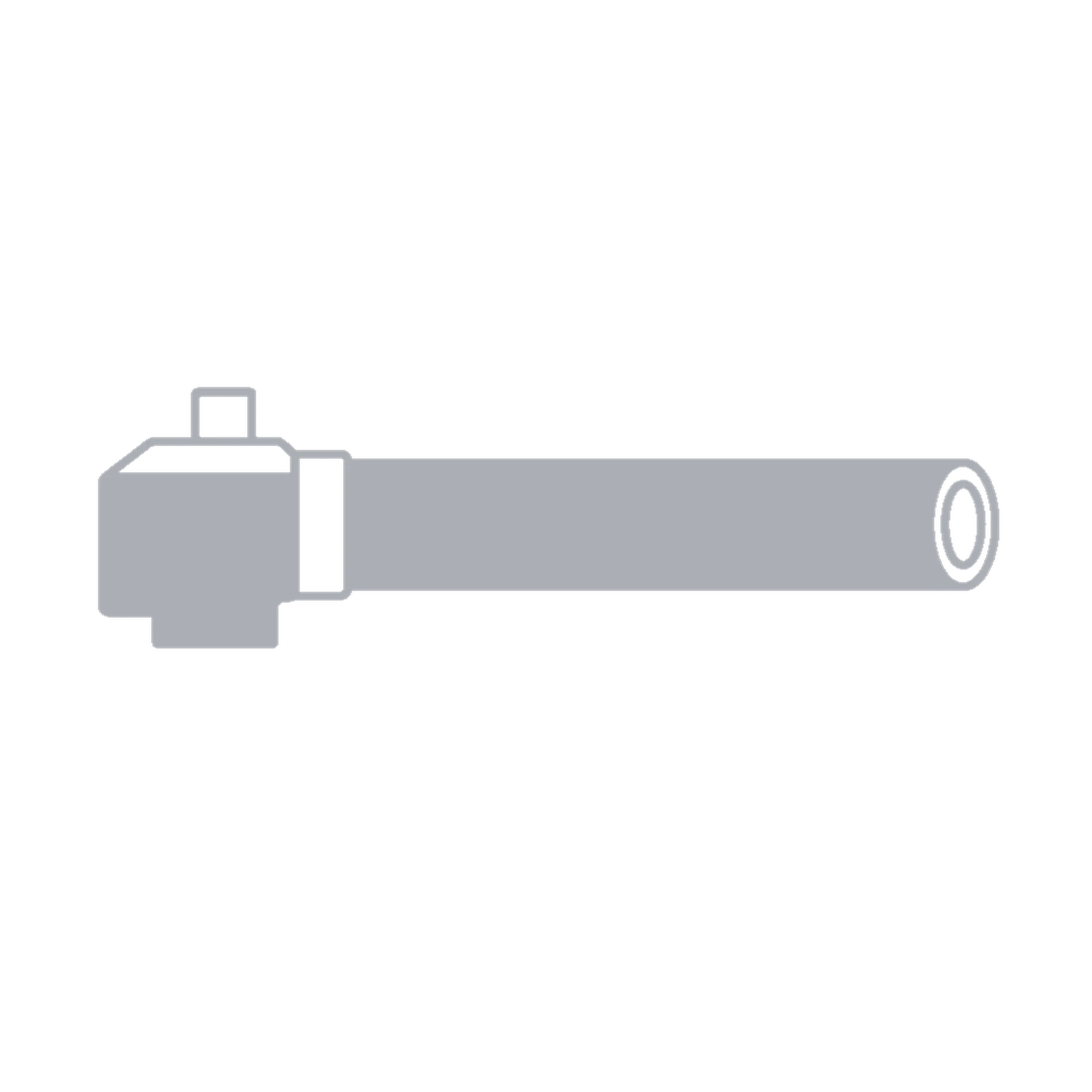 Part octagon round barrel
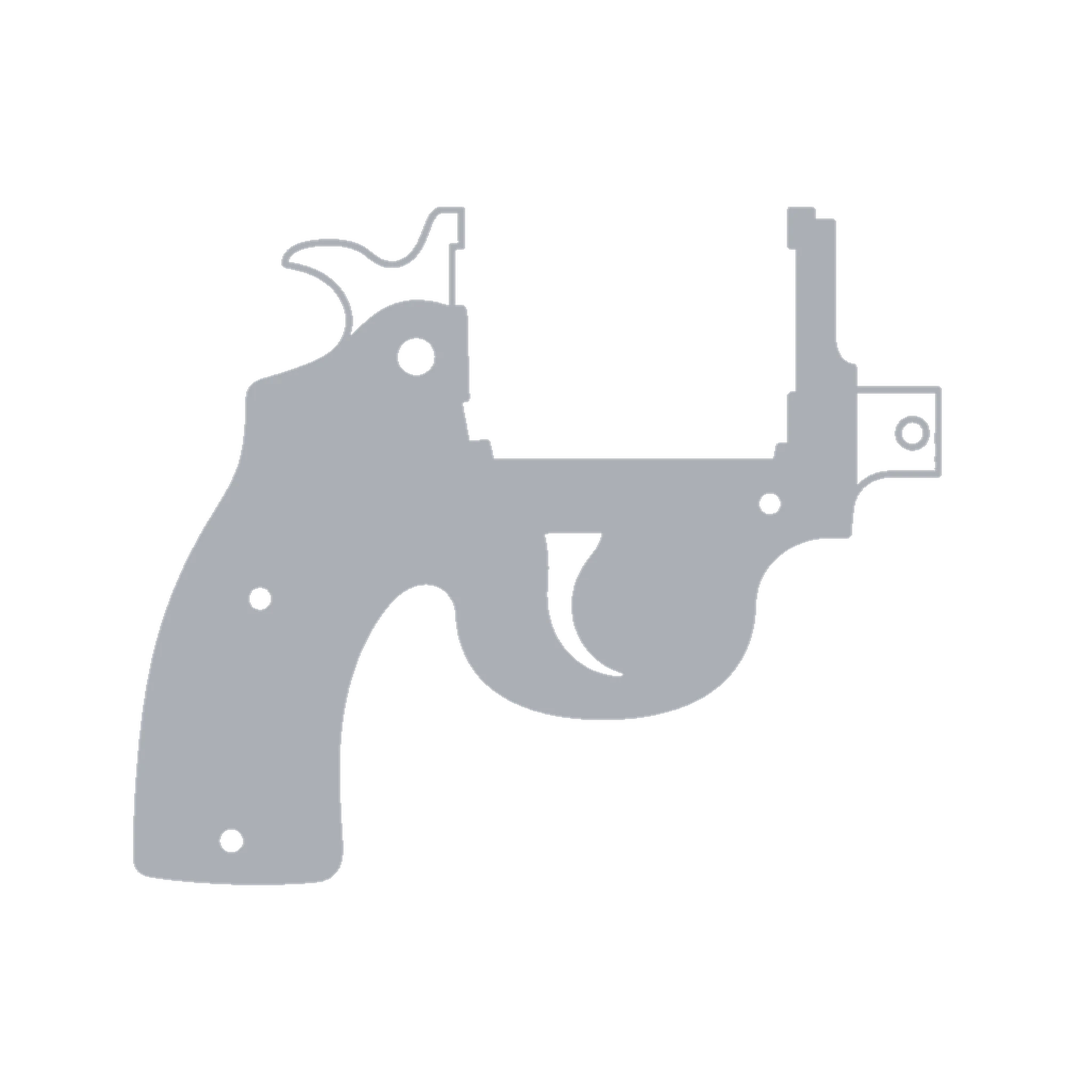 Open top frame
 Six shot cylinder
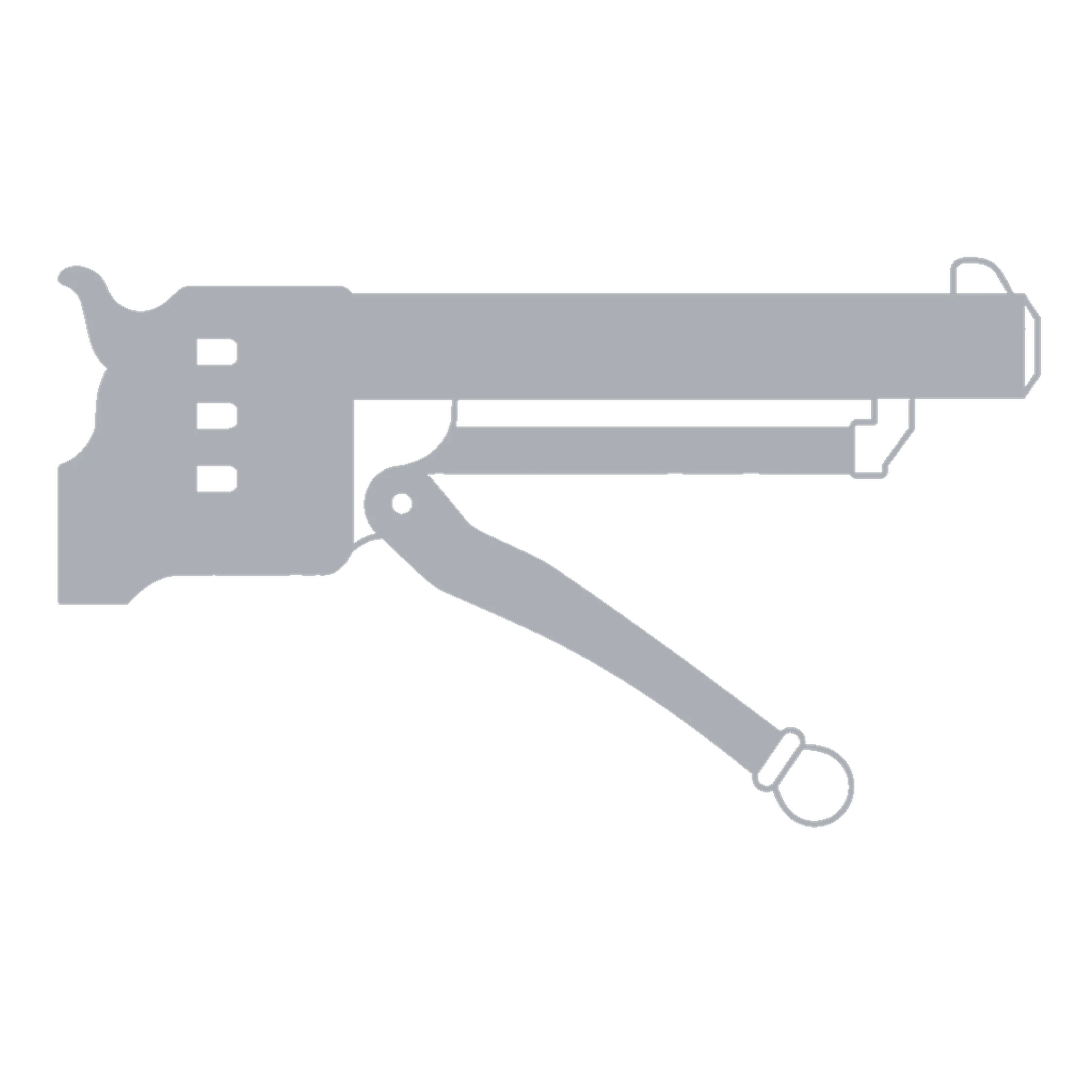 Loading lever
 Single action percussion
Standing
How it compares
Each figure against the firearms of the same type and cartridge that record it, or of the same type where that cartridge has too few. Positions are read to the nearest tenth.
| Measurement | This firearm | Median | Position |
|---|---|---|---|
| Empty weightAmong 27 .36 Caliber Percussion (Cap and Ball) revolvers | 1.13 kg | 1.13 kg | Near the median |
| Overall lengthAmong 27 .36 Caliber Percussion (Cap and Ball) revolvers | 356 mm | 330 mm | Longer than about 90% |
| Barrel lengthAmong 28 .36 Caliber Percussion (Cap and Ball) revolvers | 191 mm | 183 mm | Longer than about 90% |
| Magazine capacityAmong 29 .36 Caliber Percussion (Cap and Ball) revolvers | 6 | 6 | Holds more rounds than about 60% |
Answers
Questions about the Dance Brothers Revolver (CSA)
How much does the Dance Brothers Revolver (CSA) weigh?
The Dance Brothers Revolver (CSA) weighs 1.13 kg (2.49 lb) empty.
What caliber is the Dance Brothers Revolver (CSA)?
The Dance Brothers Revolver (CSA) is chambered in .36 Caliber Percussion (Cap and Ball) and .44 Caliber Percussion.
How many rounds does the Dance Brothers Revolver (CSA) hold?
The Dance Brothers Revolver (CSA) holds 6 rounds, fed from a revolving cylinder.
How long is the Dance Brothers Revolver (CSA)?
The Dance Brothers Revolver (CSA) is 356 mm (14.0 in) long overall, with a 191 mm (7.52 in) barrel.
Who makes the Dance Brothers Revolver (CSA)?
The Dance Brothers Revolver (CSA) is made by J.H. Dance & Brothers (United States). It was designed by James Henry Dance.
When was the Dance Brothers Revolver (CSA) introduced?
The Dance Brothers Revolver (CSA) was introduced in 1862 and discontinued in 1865.
How does the Dance Brothers Revolver (CSA) operate?
The Dance Brothers Revolver (CSA) uses a single action, and its firing mechanism is single action.
Compatibility
Which parts fit this firearm
Studio
Every part that mounts on this, resolved
Not a list the maker typed out: the answer comes from the mounts this firearm exposes and the interface each part needs, so it stays right when either one changes.
- Every part that mounts on any firearm in the catalogue
- Interface standards, platforms and fit overrides
- The same answers through the API and the MCP server
Requires a signed-in GunSpec account on the Studio plan. The answer is computed per part, so it is not part of the public record.


Provenance
What the record holds
Every figure above was taken from one of these pages. The confidence reflects how much of the record came from a page a claim can be checked against.
In service
- Confederate States Army
- 1862
Provenance
Confidence in this record
60%
Stockists
Where to buy
Offers link straight to the shop. GunSpec never takes the order.
No shop has listed this firearm yet
Stock and prices come from the shops themselves. If you sell this firearm, you can list it and it appears here.
List a firearmMCP
Ask an assistant about it
The same record, reached the way a person asks for it rather than the way a program does.
Ask GunSpec
Works with
Point an MCP client at GunSpec and it answers from the catalogue rather than from memory. A free key covers the read tools.
API
The call that returns this record
The same fields, in the same units, from the same endpoint the page reads.
curl --request GET \ --url 'https://api.gunspec.io/v1/firearms/dance-brothers' \ --header 'X-API-Key: your_key'{ "id": "dance-brothers", "name": "Dance Brothers Revolver (CSA)", "manufacturer": { "id": "dance-brothers", "name": "J.H. Dance & Brothers", "countryCode": "US", "foundedYear": 1862, "website": null, "logoUrl": null, "description": null, "status": null, "defunctYear": null, "stateOwned": null, "makesFirearms": null, "parentId": null, "predecessorId": null, "createdAt": "2026-06-21 23:00:46", "updatedAt": "2026-06-21 23:00:46", "version": "d6e30634e9ddb08ad37e811b73a9d0fed119ffbf83a97b3d7b95042e2446799d" }, "category": { "id": "revolver", "name": "Revolver", "description": "Handguns with a revolving cylinder containing multiple chambers" }, "country_of_origin": "US", "year_introduced": 1862, "barrel_length_mm": 191, "weight_empty_g": 1130, "action_type": "single_action"}