Fusil Lebel Mle 1886

- Category
- Rifle
- Barrel
- 798 mm
- Weight, empty
- 4.25 kg
- Introduced
- 1887
About
What it is, and why it matters
The Fusil d'Infanterie Modèle 1886, universally known as the Fusil Lebel, is a French bolt-action infantry rifle that holds the singular distinction of being the first military rifle in history chambered for a smokeless-powder cartridge. Developed with extraordinary urgency by the Commission de Châtellerault between 1885 and 1886 after French chemist Paul Vieille's invention of Poudre B - a nitrocellulose-based propellant that burned cleanly, produced virtually no smoke, and generated roughly three times the energy of black powder per unit mass - the Lebel's adoption triggered the single most significant international arms race of the late nineteenth century. Every major power, confronted with a French infantry rifle that could reach farther, shoot flatter, conceal its firing position, and deliver twice the battlefield energy of the Mauser 1871 or the Martini-Henry, was forced to scramble for its own smokeless cartridge and repeating rifle within the decade: Germany adopted the Gewehr 88, Britain the Lee-Metford, the United States the Krag-Jørgensen, and Russia the Mosin-Nagant, all in direct and urgent response to the Lebel. The rifle itself, designed by a commission led by Lt. Colonel Nicolas Lebel (whose name it would carry though he personally contributed relatively little to the final design), combined the Kropatschek-pattern tubular under-barrel magazine of the earlier Fusil Mle 1884/85 Gras with a two-piece bolt derived from the Mauser M71/84, firing the new 8x50mmR Lebel cartridge - a necked-down and re-engineered version of the 11mm Gras black-powder case, chosen expressly because existing 11mm Gras tooling could be reused. Chambered in that rimmed cartridge, the Lebel Mle 1886 pushed a 15-gram flat-nosed lead-core bullet at roughly 625 m/s in its original loading, upgraded in 1898 to the 12.8-gram spitzer solid-bronze Balle D at 700 m/s - one of the earliest spitzer rifle bullets ever fielded, preceding the German S-Patrone spitzer of 1903. The rifle measures 1,303 mm overall with a 798 mm barrel, weighs approximately 4.2 kg empty, and holds eight rounds in its tubular magazine plus one on the cartridge elevator and one in the chamber for a theoretical maximum of ten. Approximately 2.88 million Lebel rifles were manufactured between 1887 and 1920 at the three French state arsenals - Manufacture d'Armes de Châtellerault (MAC), Manufacture d'Armes de Saint-Étienne (MAS), and Manufacture d'Armes de Tulle (MAT) - with the strengthened Mle 1886 M93 bolt modification introduced in 1893 becoming the definitive variant. The Lebel served as France's standard infantry rifle through the Tonkin Expedition, the Madagascar campaigns, the Boxer Rebellion, and the entirety of the First World War, during which more French soldiers carried a Lebel into the trenches than any other rifle; the tubular magazine, already considered an anachronism when France adopted the clip-loaded Berthier Mle 1907/15 as a partial replacement, was never fully displaced from French service. In the mid-1930s, rather than scrap the vast remaining stockpile, French ordnance shortened approximately 50,000 Mle 1886/93 rifles into compact five-shot carbines designated the Mle 1886 R35 for colonial and second-line use - a conversion that gave the Lebel one final, unlikely combat career in the 1940 Battle of France, Free French campaigns in Africa and the Levant, and the opening years of the First Indochina War.
The Fusil Lebel's 1887 adoption is arguably the single most disruptive small-arms event of the nineteenth century: within months of the rifle becoming known abroad, every major European power tore up its existing infantry rifle programs and started over. The Germans rushed the Gewehr 88 into service so hastily that its committee-designed action suffered a string of barrel failures and earned the nickname 'Judenflinte' in a cynical propaganda campaign blaming alleged Jewish engineers for its faults; in reality, the rifle was simply a hurried copy of French thinking. French poilus in the First World War affectionately nicknamed the Lebel's cruciform épée-style bayonet 'Rosalie' and wrote trench-newspaper poems to her. When the rifle was shortened into the R35 carbine forty-nine years after its introduction, many of the rifles cut down in 1935 had already served through colonial wars in four continents - and would go on to serve a fifth, Southeast Asia, as late as the 1946 siege of Hanoi.
The Lebel Mle 1886 is the rifle that made every other military rifle in the world obsolete overnight. Before Poudre B, rifle cartridges were loaded with black powder, which fouled bores after a few dozen shots, emitted huge clouds of white smoke that gave away the shooter's position, and limited practical muzzle velocities to around 450 m/s. The 8mm Lebel, driven by Paul Vieille's nitrocellulose propellant, pushed a smaller bullet nearly 40% faster than the 11mm Gras it replaced while producing virtually no smoke and leaving the bore nearly clean after an entire battle's worth of fire. The French adoption in April 1887 was held as a state secret for as long as possible; when foreign military attachés eventually confirmed the capability of the new cartridge, it produced such alarm that the Kaiser personally ordered the German war ministry to equip the Reichsheer with a smokeless-powder rifle in under eighteen months - a panic that produced the notoriously flawed Gewehr 88. The Lebel's tubular magazine was its greatest long-term weakness: to prevent the spitzer point of one cartridge from striking the primer of the cartridge ahead of it in the tube (which would have caused a catastrophic chain detonation), the Balle D spitzer had to be machined with a circumferential groove around its base to seat the preceding bullet's nose safely, and the magazine had to be loaded one round at a time - no stripper clip, no en-bloc clip, no speed loading of any kind. A skilled French infantryman could manage perhaps twelve to fifteen aimed shots per minute under ideal conditions, but the slow, round-by-round reloading procedure was a serious tactical handicap by 1914, and it is the primary reason the Berthier rifle with its three-round Mannlicher-style en-bloc clip was adopted alongside the Lebel from 1907 onward. Despite this, French conservatism and vast stockpiles of Mle 1886 rifles - plus the sheer amount of 8mm Lebel ammunition held in French depots - kept the rifle in frontline trench service throughout World War I. The R35 conversion of 1935-1936 cut the barrel from 798 mm to approximately 450 mm and reduced the magazine from eight rounds to three, producing a handy carbine for cavalry, engineers, and colonial troops; R35s fought German Panzers in 1940 and Japanese forces in Indochina through 1946. The rifle's distinctive épée-type cruciform bayonet, sometimes nicknamed the 'Rosalie' by French poilus, became one of the most recognizable visual emblems of the French soldier on the Western Front.
Specification
Everything measured
IdentityWhat it is, who built it and when.
- Manufacturer
- Manufacture Nationale d'Armes de Châtellerault (MAC)
- Category
- Rifle
- Country
- France
- Status
- Discontinued
- Produced
- 1887 to 1940
DimensionsAs issued, without a magazine or an optic.
- Barrel
- 798 mm
- Overall length
- 1303 mm
- Sight radius
- 685 mm
- Weight, empty
- 4.25 kg
- Weight, loaded
- 4.42 kg
ActionHow it cycles, what trips it, and what feeds it.
- Action
- Bolt action
- Firing mechanism
- Striker fired
- Trigger
- Single stage
- Capacity
- 8
- Magazine
- Tube
MaterialsEach swatch is the material itself, not a colour chosen to stand for it.
- Frame
- Steel
- Barrel
- Steel
- Stock
- Wood
- Finish
- Blued
BallisticsFrom the service cartridge, not a handload.
- Muzzle velocity
- 725 m/s
- Muzzle energy
- 3360 J
- Effective range
- 400 m
- Maximum range
- 2400 m
- Rate of fire
- 15 rpm
Trajectory
What the round does downrange
Solved from the muzzle figures and the bullet. The dashed rule is the effective range on the record, and the crosses are the steps the solver returned.
No load solved for this record yetThe flight path is computed from a cartridge and a bullet. This record has no ammunition filed against its chambering, so there is nothing to solve.
Features
What it has
What the record lists as fitted, drawn from the catalogue.
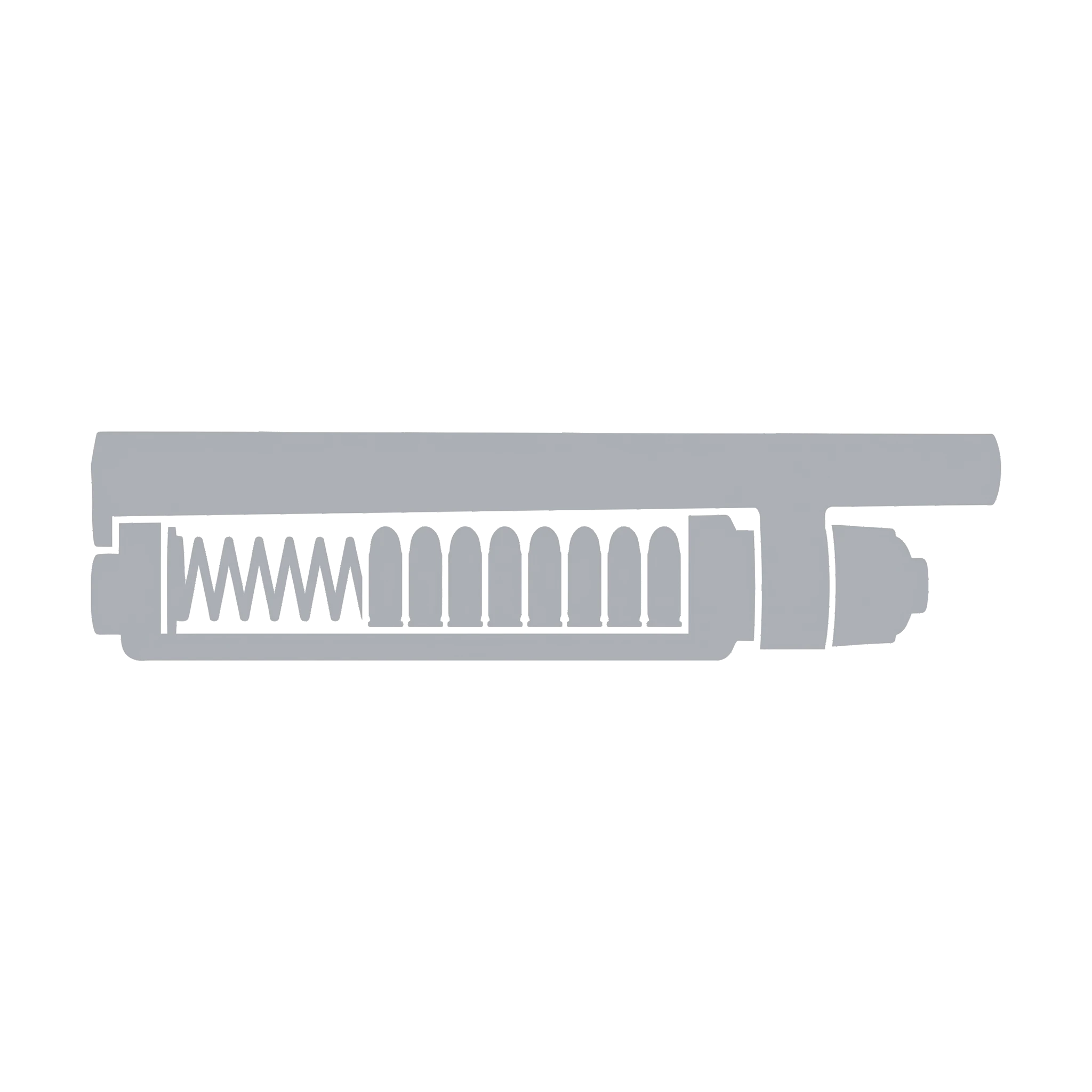 Under barrel tubular magazine
 8 round tube magazine
- Plus 1 on lift plus 1 in chamber total capacity 10
 Magazine cutoff lever
- Cartridge elevator
 Two piece walnut stock
 Epee baton bayonet lug
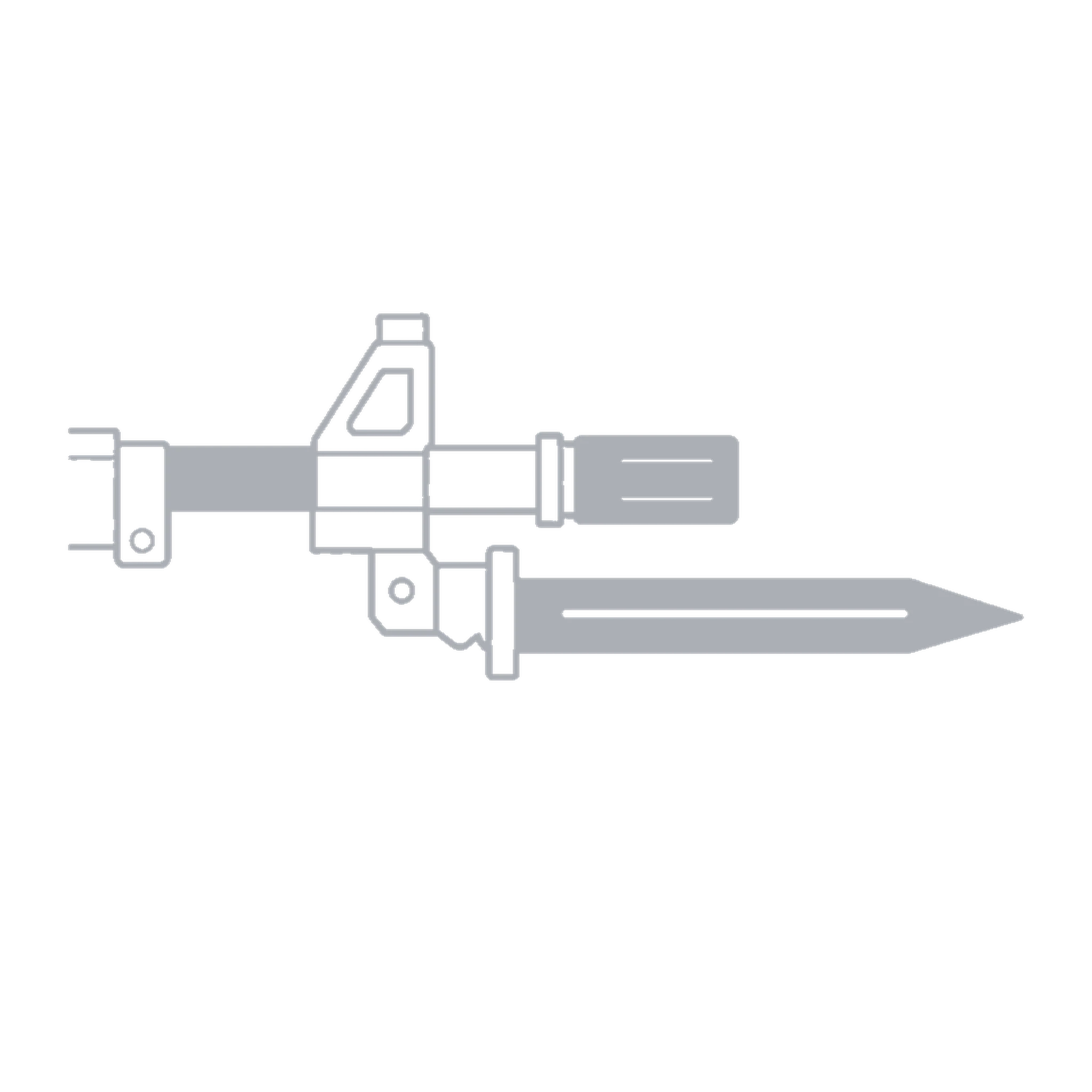 Cruciform bayonet
 Quadrant leaf sight
 Cleaning rod housed under barrel
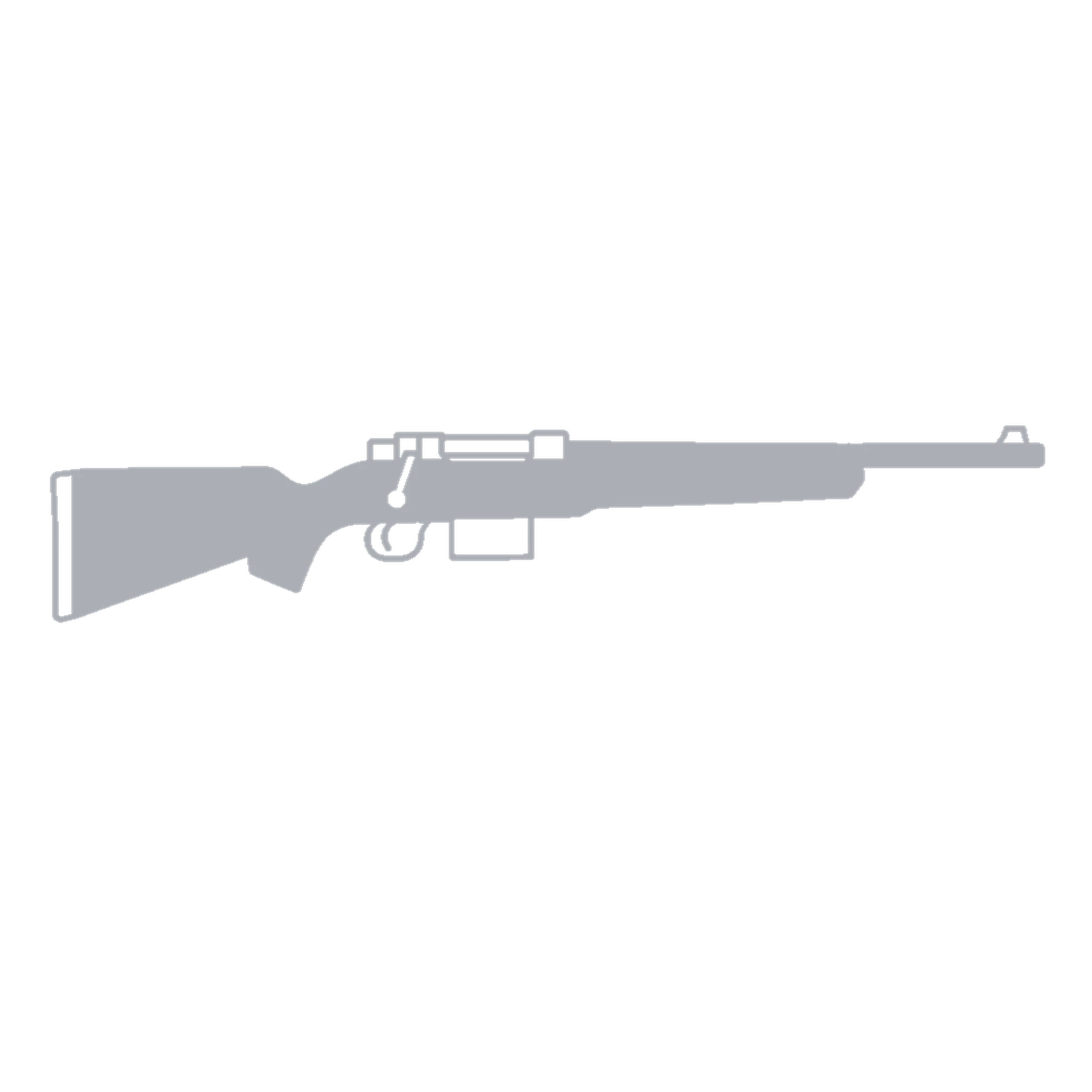 First smokeless powder military rifle
- Poudre b smokeless propellant
Standing
How it compares
Each figure against the firearms of the same type and cartridge that record it, or of the same type where that cartridge has too few. Positions are read to the nearest tenth.
| Measurement | This firearm | Median | Position |
|---|---|---|---|
| Empty weightAmong 1,612 rifles | 4.25 kg | 3.50 kg | Heavier than about 80% |
| Overall lengthAmong 1,557 rifles | 1303 mm | 1080 mm | Longer than about 90% |
| Barrel lengthAmong 1,659 rifles | 798 mm | 584 mm | Longer than about 90% |
| Magazine capacityAmong 1,611 rifles | 8 | 5 | Holds more rounds than about 70% |
Answers
Questions about the Fusil Lebel Mle 1886
How much does the Fusil Lebel Mle 1886 weigh?
The Fusil Lebel Mle 1886 weighs 4.25 kg (9.36 lb) empty and 4.42 kg (9.74 lb) loaded.
What caliber is the Fusil Lebel Mle 1886?
The Fusil Lebel Mle 1886 is chambered in 8x50mmR Lebel.
How many rounds does the Fusil Lebel Mle 1886 hold?
The Fusil Lebel Mle 1886 holds 8 rounds, fed from a tube magazine.
How long is the Fusil Lebel Mle 1886?
The Fusil Lebel Mle 1886 is 1303 mm (51.3 in) long overall, with a 798 mm (31.4 in) barrel.
Who makes the Fusil Lebel Mle 1886?
The Fusil Lebel Mle 1886 is made by Manufacture Nationale d'Armes de Châtellerault (MAC) (France). It was designed by Lt. Col. Nicolas Lebel, Cpt. Desaleux, and the Commission de Châtellerault (propellant by Paul Vieille, chassis derived from Fusil Mle 1884/85 Gras-Kropatschek).
When was the Fusil Lebel Mle 1886 introduced?
The Fusil Lebel Mle 1886 was introduced in 1887 and discontinued in 1940.
How does the Fusil Lebel Mle 1886 operate?
The Fusil Lebel Mle 1886 uses a bolt action, and its firing mechanism is striker fired.
Compatibility
Which parts fit this firearm
Studio
Every part that mounts on this, resolved
Not a list the maker typed out: the answer comes from the mounts this firearm exposes and the interface each part needs, so it stays right when either one changes.
- Every part that mounts on any firearm in the catalogue
- Interface standards, platforms and fit overrides
- The same answers through the API and the MCP server
Requires a signed-in GunSpec account on the Studio plan. The answer is computed per part, so it is not part of the public record.


Provenance
What the record holds
Every figure above was taken from one of these pages. The confidence reflects how much of the record came from a page a claim can be checked against.
In service
- French Army
- 1887
- French Foreign Legion
- 1887
- Free French Forces
- 1940
- French Resistance
- 1940
- Imperial Russian Army
- 1915
- Kingdom of Greece
- 1916
- Kingdom of Serbia
- 1914
- Kingdom of Romania
- 1916
- Polish Army
- 1919
- Kingdom of Yugoslavia
- 1918
Provenance
Stockists
Where to buy
Offers link straight to the shop. GunSpec never takes the order.
No shop has listed this firearm yet
Stock and prices come from the shops themselves. If you sell this firearm, you can list it and it appears here.
List a firearmMCP
Ask an assistant about it
The same record, reached the way a person asks for it rather than the way a program does.
Ask GunSpec
Works with
Point an MCP client at GunSpec and it answers from the catalogue rather than from memory. A free key covers the read tools.
API
The call that returns this record
The same fields, in the same units, from the same endpoint the page reads.
curl --request GET \ --url 'https://api.gunspec.io/v1/firearms/lebel-1886' \ --header 'X-API-Key: your_key'{ "id": "lebel-1886", "name": "Fusil Lebel Mle 1886", "manufacturer": { "id": "manufacture-nationale-darmes-de-chatellerault", "name": "Manufacture Nationale d'Armes de Châtellerault (MAC)", "countryCode": "FR", "foundedYear": 1819, "website": null, "logoUrl": null, "description": null, "status": null, "defunctYear": null, "stateOwned": null, "makesFirearms": null, "parentId": null, "predecessorId": null, "createdAt": "2026-04-26 23:12:00", "updatedAt": "2026-04-26 23:12:00", "version": "b1cbc082908ff0c3f09b87e11c0e31339669b84cb05ee25e482ed5c352f9f6f2" }, "category": { "id": "rifle", "name": "Rifle", "description": "Long-barreled firearms designed for accurate shooting" }, "country_of_origin": "FR", "year_introduced": 1887, "barrel_length_mm": 798, "weight_empty_g": 4245, "action_type": "bolt_action"}