FG 42

- Category
- Battle Rifle
- Barrel
- 500 mm
- Weight, empty
- 4.38 kg
- Introduced
- 1942
About
What it is, and why it matters
The FG 42 (Fallschirmjägergewehr 42, or 'paratrooper rifle 42') is a selective-fire battle rifle designed specifically for Germany's elite Fallschirmjäger airborne forces during World War II. Developed by Rheinmetall-Borsig AG in 1942 in response to harsh lessons learned during the costly Battle of Crete in 1941, where paratroopers armed only with pistols suffered devastating casualties while attempting to retrieve their weapons from scattered drop containers, the FG 42 represented one of the most advanced and innovative small arms designs of the war. Chambered in the full-power 7.92x57mm Mauser cartridge, it uniquely combined the characteristics of a rifle, light machine gun, and submachine gun in a single lightweight package weighing just 4.38 kg. The weapon featured revolutionary design elements including a straight-line stock to reduce muzzle climb, side-mounted magazine to allow prone shooting, dual-mode firing mechanism (closed bolt for semi-automatic accuracy, open bolt for full-automatic cooling), integral scope rail, and inline recoil spring running into the stock. The FG 42 fired from a 20-round detachable box magazine at 900 rounds per minute (Type I) or 750 rpm (Type II) with an effective range of 600 meters. Only approximately 7,000 units were produced across two major variants before war's end, making it one of the rarest and most advanced firearms of WWII. The weapon's innovative features directly influenced post-war firearms development, most notably the American M60 machine gun.
The FG 42 was born from the blood of Crete. During Operation Mercury in May 1941, German paratroopers jumped armed only with pistols and grenades, their support weapons dropped separately in canisters scattered across the battlefield. As they landed, Commonwealth defenders armed with rifles and machine guns inflicted devastating casualties on the lightly-armed Fallschirmjäger struggling to reach their weapon containers. The pyrrhic victory at Crete-Germany's first major airborne assault and its last large-scale paratrooper operation-convinced Luftwaffe commanders that paratroopers needed a weapon combining the firepower of a light machine gun with the portability of a rifle. The FG 42 was the answer. The weapon made its combat debut during the daring Gran Sasso raid (Operation Eiche) in September 1943, when German commandos led by Otto Skorzeny rescued Italian dictator Benito Mussolini from 200 well-equipped Carabinieri guards-period photographs show raiders carrying Type I FG 42s fitted with ZF-4 scopes. Allied troops soon encountered the FG 42 in the brutal fighting at Monte Cassino and along the Gustav Line in Italy, where its devastating firepower and accuracy made it fearsome in the hands of elite Fallschirmjäger defenders. Large numbers were captured in Normandy in 1944. Captured FG 42s were prized war trophies, with Allied ordnance teams carefully studying its innovative features. Though produced in tiny numbers, the FG 42 cast a long shadow over post-war firearms development-its gas-operated rotating bolt mechanism was directly incorporated into the M60 machine gun, and its straight-line stock, inline recoil spring, select-fire capability, and general configuration influenced countless modern rifles. Today, original FG 42s are among the most valuable and sought-after military firearms, with authentic examples commanding six-figure prices at auction. The weapon was considered so advanced that modern semi-automatic reproductions by SMG Guns and others remain popular with collectors and shooters.
The FG 42 existed in two main production variants with significant differences. The Type I (FG 42-1 or Ausfuhrung E), manufactured by Rheinmetall-Borsig AG, featured a stamped steel receiver, sharply angled pistol grip, stamped steel buttstock, metal heat shield over the barrel, distinctive pepper-box style flash hider/muzzle brake, and bipod mounted forward on the handguard. Only about 2,000 Type I rifles were produced before material shortages (particularly manganese steel for receivers) forced a complete redesign. The Type II (FG 42-2 or Ausfuhrung G), manufactured by Heinrich Krieghoff Waffenfabrik of Suhl, incorporated lessons from field use: wooden buttstock and handguard to reduce heat transfer and add weight for better controllability, near-vertical pistol grip for improved handling, bipod relocated to the muzzle to dramatically improve accuracy by eliminating barrel harmonics issues, slotted/finned flash hider, heavier bolt to reduce cyclic rate from 900 to 750 rpm, and improved bayonet retention system. Production numbers remain uncertain, with estimates ranging from 5,000 to 9,000 total units across both variants. The weapon's complexity and cost (roughly equivalent to three Kar98k rifles) led to it being overshadowed by simpler designs like the StG 44. The innovative side-mounted magazine kept the weapon's profile low for prone shooting and allowed the action to be positioned more forward, reducing overall length. The dual-mode firing system-firing from a closed bolt in semi-auto for accuracy and from an open bolt in full-auto to prevent cook-offs-was remarkably sophisticated but added mechanical complexity. Despite limited production and being designed for airborne operations, the FG 42 saw most combat in conventional infantry roles, as German airborne assaults largely ceased after Crete.
Specification
Everything measured
IdentityWhat it is, who built it and when.
- Manufacturer
- Rheinmetall AG
- Category
- Battle Rifle
- Country
- Germany
- Status
- Discontinued
- Produced
- 1942 to 1945
DimensionsAs issued, without a magazine or an optic.
- Barrel
- 500 mm
- Overall length
- 945 mm
- Width
- 58 mm
- Weight, empty
- 4.38 kg
- Weight, loaded
- 5.10 kg
ActionHow it cycles, what trips it, and what feeds it.
- Action
- Gas operated long stroke
- Firing mechanism
- Striker fired
- Trigger
- Single stage
- Trigger pull
- 27.0 N
- Capacity
- 20
- Magazine
- Detachable box
MaterialsEach swatch is the material itself, not a colour chosen to stand for it.
- Frame
- Stamped steel
- Barrel
- Steel
- Stock
- Steel
- Finish
- Blued
BallisticsFrom the service cartridge, not a handload.
- Muzzle velocity
- 732 m/s
- Muzzle energy
- 3430 J
- Effective range
- 500 m
- Maximum range
- 1200 m
- Rate of fire
- 750 rpm
Trajectory
What the round does downrange
Solved from the muzzle figures and the bullet. The dashed rule is the effective range on the record, and the crosses are the steps the solver returned.
No load solved for this record yetThe flight path is computed from a cartridge and a bullet. This record has no ammunition filed against its chambering, so there is nothing to solve.
Features
What it has
What the record lists as fitted, drawn from the catalogue.
 Select fire
- Dual bolt position firing
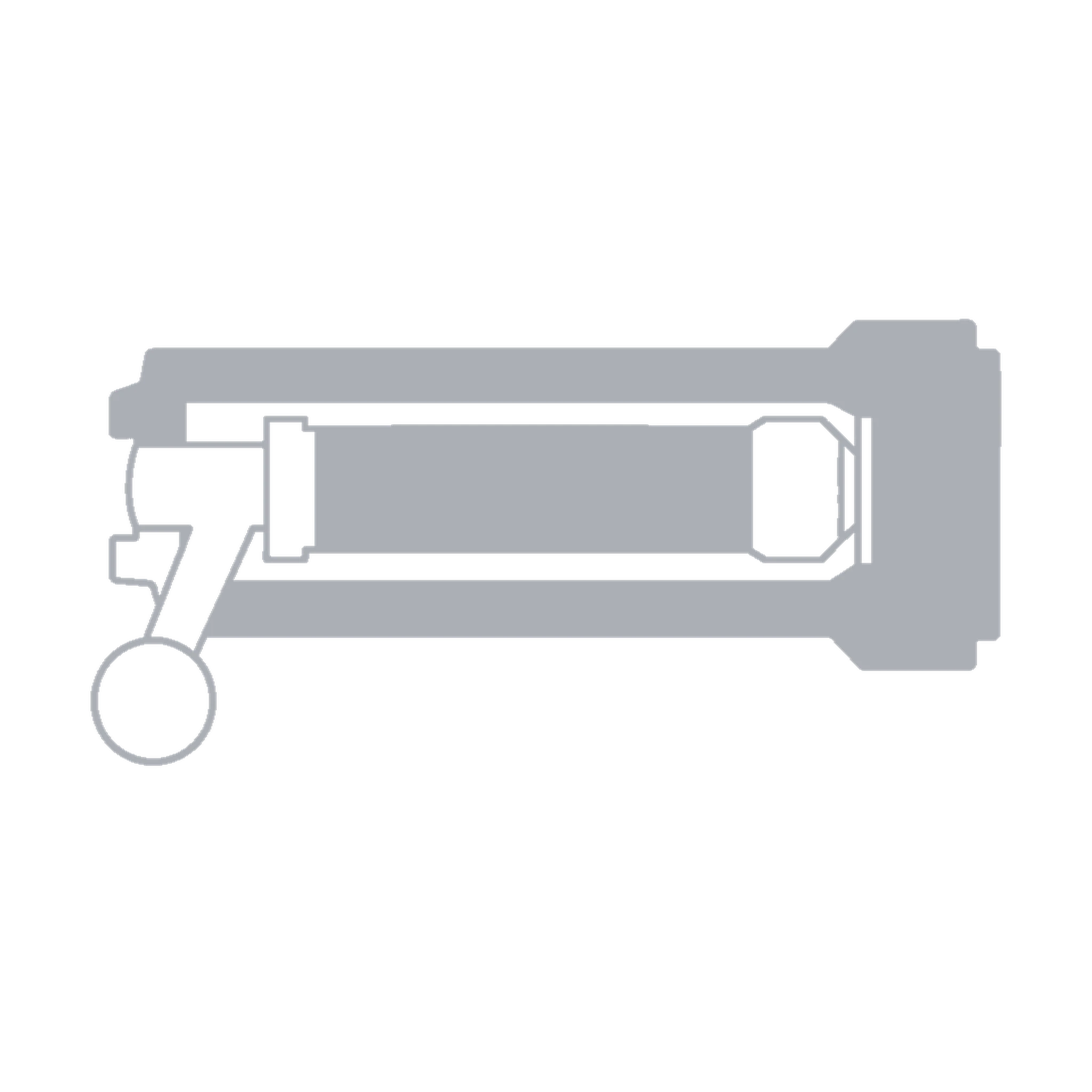 Closed bolt semi auto
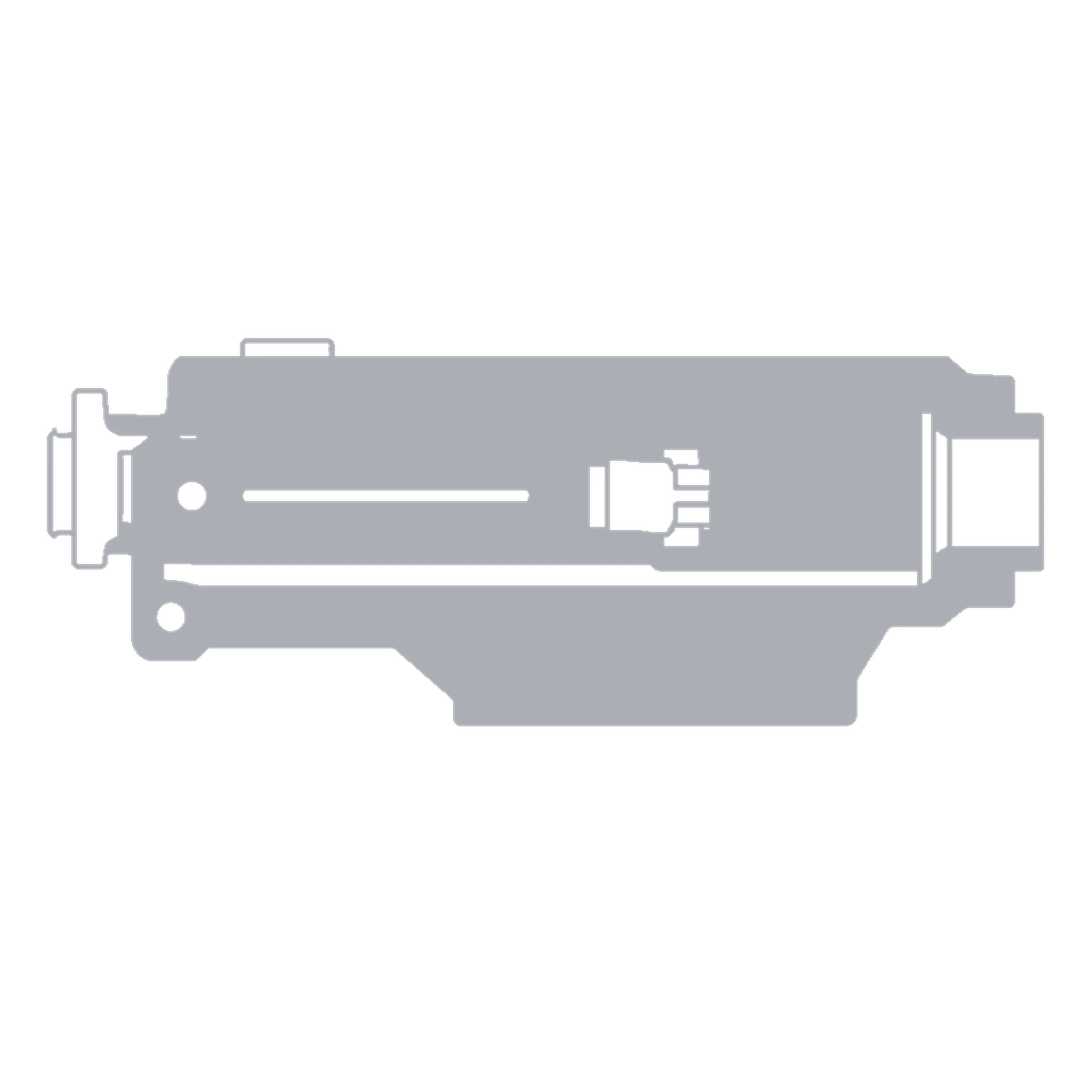 Open bolt full auto
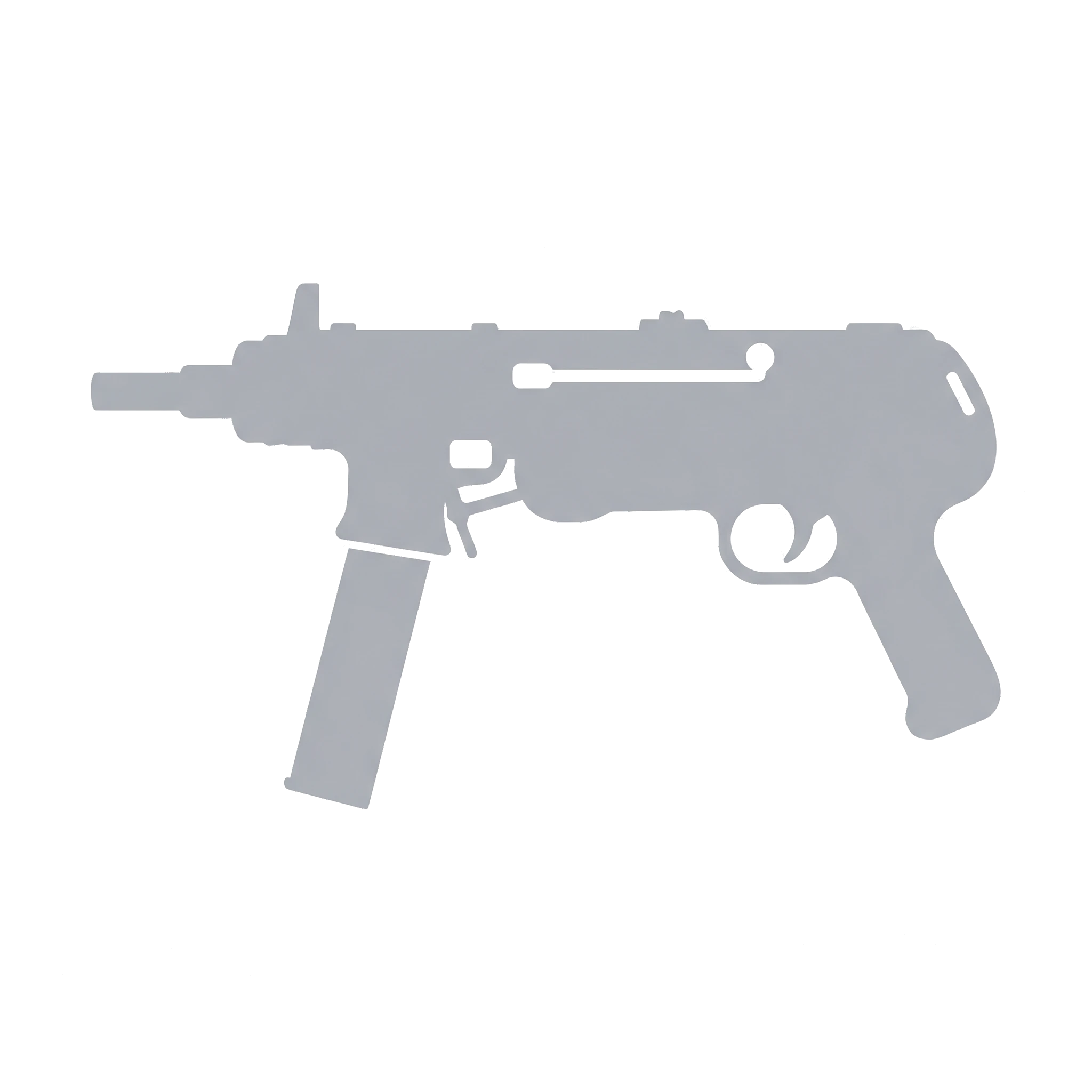 Side mounted magazine
 Integral bipod
 Integral scope rail
 Straight line stock
 Inline recoil spring
 Stamped steel construction
 Bayonet lug
- Rifle grenade capability
 Muzzle brake
 Gas operated rotating bolt
Standing
How it compares
Each figure against the firearms of the same type and cartridge that record it, or of the same type where that cartridge has too few. Positions are read to the nearest tenth.
| Measurement | This firearm | Median | Position |
|---|---|---|---|
| Empty weightAmong 107 battle rifles | 4.38 kg | 4.30 kg | Heavier than about 70% |
| Overall lengthAmong 107 battle rifles | 945 mm | 1025 mm | Shorter than about 80% |
| Barrel lengthAmong 110 battle rifles | 500 mm | 457 mm | Longer than about 60% |
| Magazine capacityAmong 110 battle rifles | 20 | 20 | Holds more rounds than about 60% |
Answers
Questions about the FG 42
How much does the FG 42 weigh?
The FG 42 weighs 4.38 kg (9.66 lb) empty and 5.10 kg (11.24 lb) loaded.
What caliber is the FG 42?
The FG 42 is chambered in 7.92x57mm Mauser.
How many rounds does the FG 42 hold?
The FG 42 holds 20 rounds, fed from a detachable box magazine.
How long is the FG 42?
The FG 42 is 945 mm (37.2 in) long overall, with a 500 mm (19.7 in) barrel.
Who makes the FG 42?
The FG 42 is made by Rheinmetall AG (Germany). It was designed by Louis Stange.
When was the FG 42 introduced?
The FG 42 was introduced in 1942 and discontinued in 1945.
How does the FG 42 operate?
The FG 42 uses a gas operated long stroke action, and its firing mechanism is striker fired.
Compatibility
Which parts fit this firearm
Studio
Every part that mounts on this, resolved
Not a list the maker typed out: the answer comes from the mounts this firearm exposes and the interface each part needs, so it stays right when either one changes.
- Every part that mounts on any firearm in the catalogue
- Interface standards, platforms and fit overrides
- The same answers through the API and the MCP server
Requires a signed-in GunSpec account on the Studio plan. The answer is computed per part, so it is not part of the public record.


Provenance
What the record holds
Every figure above was taken from one of these pages. The confidence reflects how much of the record came from a page a claim can be checked against.
In service
- Fallschirmjäger (German Paratroopers)
- 1943
- 1st Parachute Division
- 1943
- 2nd Parachute Division
- 1944
- Waffen-SS
- 1943
Provenance
Stockists
Where to buy
Offers link straight to the shop. GunSpec never takes the order.
No shop has listed this firearm yet
Stock and prices come from the shops themselves. If you sell this firearm, you can list it and it appears here.
List a firearmMCP
Ask an assistant about it
The same record, reached the way a person asks for it rather than the way a program does.
Ask GunSpec
Works with
Point an MCP client at GunSpec and it answers from the catalogue rather than from memory. A free key covers the read tools.
API
The call that returns this record
The same fields, in the same units, from the same endpoint the page reads.
curl --request GET \ --url 'https://api.gunspec.io/v1/firearms/fg-42' \ --header 'X-API-Key: your_key'{ "id": "fg-42", "name": "FG 42", "manufacturer": { "id": "rheinmetall", "name": "Rheinmetall AG", "countryCode": "DE", "foundedYear": 1889, "website": "https://www.rheinmetall.com", "logoUrl": null, "description": null, "status": null, "defunctYear": null, "stateOwned": null, "makesFirearms": null, "parentId": null, "predecessorId": null, "createdAt": "2026-02-11 23:44:38", "updatedAt": "2026-02-18 03:43:49", "version": "701a641626090806677db45286b2453c083ea19a69b3788759e4c38b905e45a5" }, "category": { "id": "battle-rifle", "name": "Battle Rifle", "description": "Selective-fire rifles chambered in full-power cartridges" }, "country_of_origin": "DE", "year_introduced": 1942, "barrel_length_mm": 500, "weight_empty_g": 4380, "action_type": "gas_operated_long_stroke"}